




Mid Century Modern Dining Table
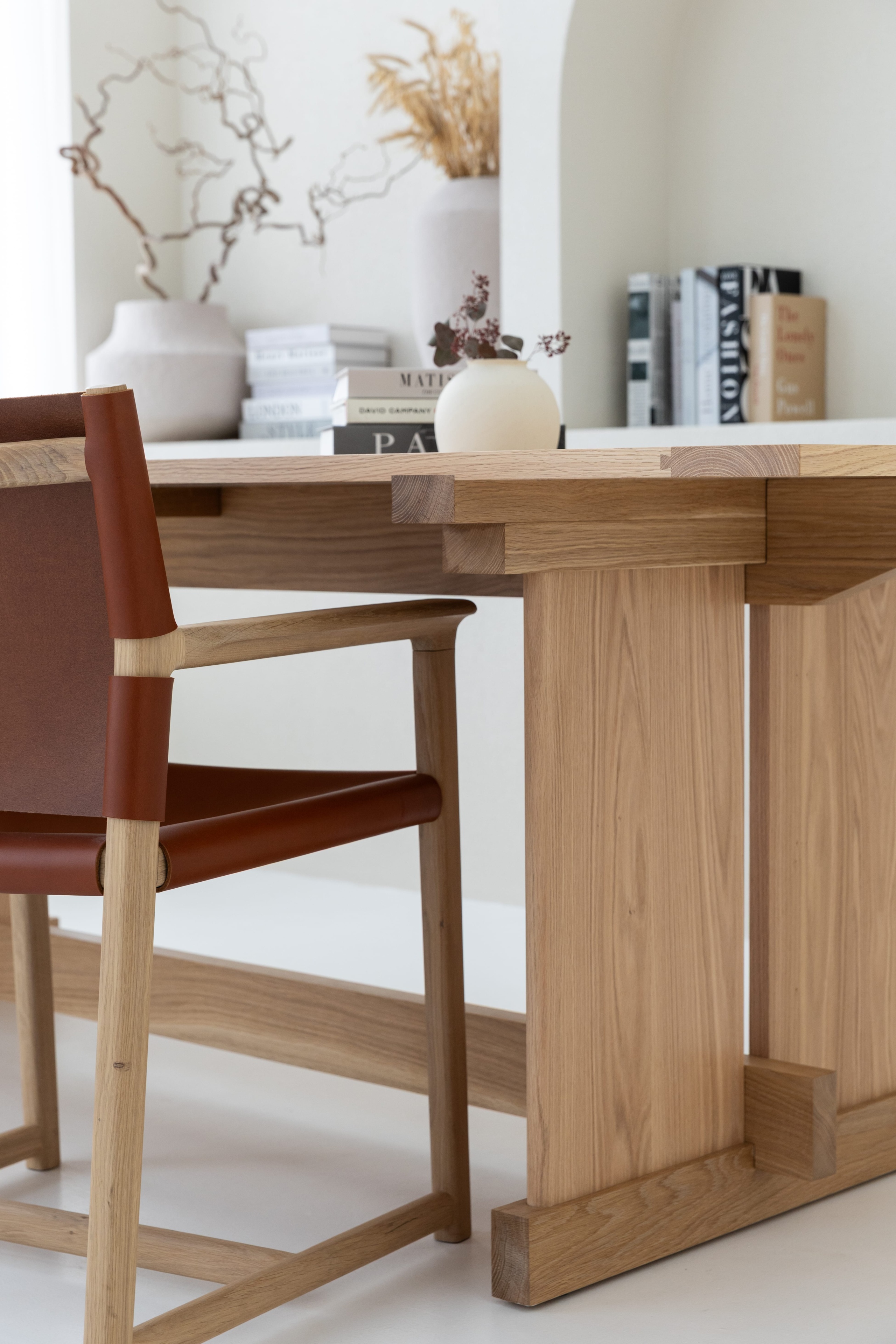
Solid oak, built on two broad panel legs rather than four corner posts. The legs are set in from the ends, so the table stays clear where people actually sit — no corner to work around, and a bench slides straight underneath. Each leg is joined with through-tenons, top and bottom. The end grain of the tenon is left showing where it passes through the top rail and again where it meets the plinth foot, so you can read how the table is put together by looking at it. No brackets, no visible hardware. The proportions are mid-century: low, horizontal, a generous overhang at each end, and a top left plain so the grain does the work. Finished with a stain and satin lacquer that keeps the figure visible and the surface easy to live with. Made to order in solid oak. Most pieces ship in 4–8 weeks. We ship worldwide. Delivery is quoted separately once we know where the piece is going — within the EU it is typically €100–250 depending on the location.
Price range: 1 350,00 € through 2 950,00 €
Description & origin
Mid Century Modern Dining Table
Solid oak, built on two broad panel legs rather than four corner posts. The legs are set in from the ends, so the table stays clear where people actually sit — no corner to work around, and a bench slides straight underneath.
Each leg is joined with through-tenons, top and bottom. The end grain of the tenon is left showing where it passes through the top rail and again where it meets the plinth foot, so you can read how the table is put together by looking at it. No brackets, no visible hardware.
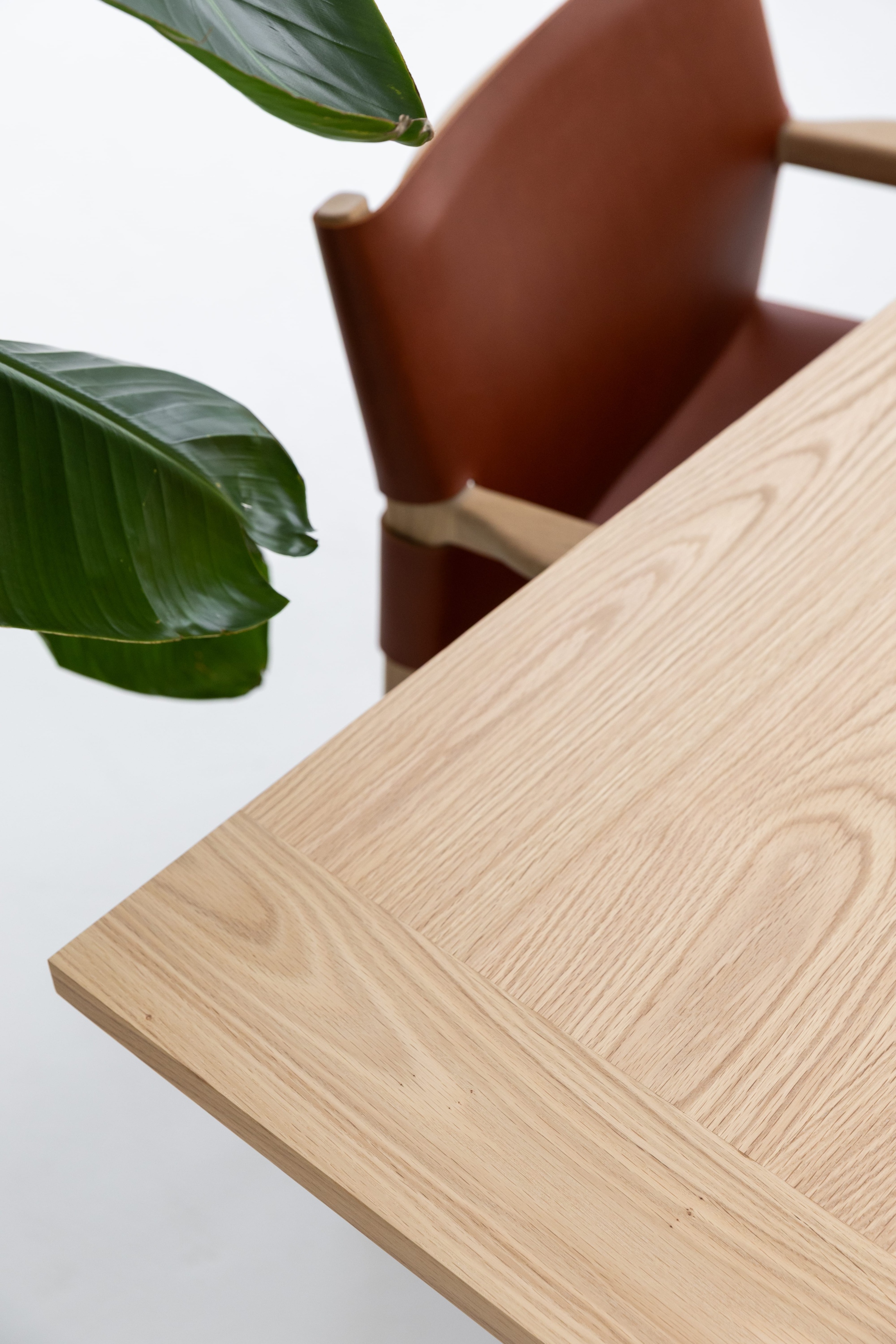
The proportions are mid-century: low, horizontal, a generous overhang at each end, and a top left plain so the grain does the work. Finished with a stain and satin lacquer that keeps the figure visible and the surface easy to live with.
Made to order in solid oak. Most pieces ship in 4–8 weeks. We ship worldwide. Delivery is quoted separately once we know where the piece is going — within the EU it is typically €100–250 depending on the location.
Design story
Mid Century Modern Dining Table
Mid-century Scandinavian dining tables solved a problem most tables still ignore: how to seat people without putting a leg where a person wants to be.
The answer was to move the support inboard and carry the load on two panels rather than four posts. This table follows that logic. The panels stand on plinth feet and are pinned with through-tenons, top and bottom — a joint stronger than a bracket and, unlike a bracket, worth looking at.
Everything else was pared back. No profiling on the edge, no visible hardware. The top is left plain so the grain is the only thing decorating it.
Care guide
Mid Century Modern Dining Table
Solid oak is a living material. It takes up and gives off moisture with the seasons and moves slightly as it does — the construction allows for that. A few habits are what keep a piece looking right for decades.
Everyday cleaning. A soft cloth, damp with water, is all it needs. Wipe spills as they happen: oak is porous and standing water will leave a mark. No solvents, no ammonia-based cleaners, no silicone polish — they degrade an oiled finish.
Heat and humidity. Use mats under hot dishes. Aim to keep the room between 40% and 60% relative humidity and avoid rapid swings. A table pushed against a radiator, or standing in a newly built room that is still drying out, will move more than one in a settled space. Underfloor heating is fine; a heat source concentrated on one side is not.
Light. Oak changes colour as it ages. Raw and lightly stained oak ambers over the first year, then settles. Avoid leaving objects in the same spot for months, or you will find a pale rectangle underneath when you move them. Prolonged direct sunlight accelerates all of this.
Re-oiling. Once a year, or whenever the surface starts to look dry or feels rough under the hand. Clean it, let it dry, apply a thin coat of hardwax oil with a lint-free cloth, and wipe off the excess after twenty minutes. No sanding needed.
Marks and dents. This is the advantage of solid timber over veneer: it can be repaired. Light marks come out with fine abrasive paper — 240 grit or finer, worked along the grain — followed by re-oiling, and the repair disappears. For anything deeper, write to us before you start.
Moving it. Lift, do not drag. Carrying a dining table by its top puts the whole load through the joints.
Related products
-

Monolith
2 950,00 € -

Leaning Bookshelf
600,00 € -

Sculptural Coffee Table – Teak Tone
850,00 € -

Sculptural Coffee Table – Walnut Tone
900,00 €


